Ever wondered why you suddenly gain or lose an hour of sleep twice a year? That’s “Uhrenumstellung” – the German term for clock change or daylight saving time adjustment. This biannual ritual affects millions across Europe and beyond, prompting a collective fumbling with watch settings and digital displays.
While Americans call it “springing forward” or “falling back,” Germans have efficiently condensed the concept into one precise word. Uhrenumstellung isn’t just about adjusting timepieces; it’s a phenomenon that impacts sleep patterns, daily routines, and even economic productivity. Some love the extra hour of sleep in fall, while others dread the lost hour in spring – a universal experience transcending cultural boundaries.
What Is Uhrenunstellung: Understanding Germany’s Time Change
Uhrenumstellung directly translates to “clock change” in German, referring to the biannual ritual of adjusting timepieces for daylight saving time (DST). Germans experience this time shift twice yearly – “Sommerzeit” (summer time) begins in March when clocks move forward an hour, and “Winterzeit” (winter time) starts in October when they turn back. This practice dates back to 1980 when Germany officially implemented daylight saving time, following many European countries adopting similar measures.
The German precision regarding time change extends beyond simple clock adjustments. Deutsche Bahn trains scheduled during the transition hour make specific accommodations – during spring’s forward change, trains wait at stations for the “missing” hour to pass, while autumn’s backward shift causes trains to pause until the correct time arrives. This meticulous approach reflects Germany’s cultural emphasis on punctuality and organization.
Unlike countries that might casually refer to “turning clocks back” or “springing forward,” Germans use the specific term “Uhrenumstellung” in everyday conversation, demonstrating language efficiency by encapsulating the entire concept in one compound word. The German Federal Physical-Technical Institute (PTB) coordinates the official time change, ensuring atomic clocks across the nation synchronize precisely during these transitions.
The economic impact of Uhrenumstellung remains significant for German businesses, particularly those operating across multiple time zones. Many German multinational corporations implement special protocols during these periods to maintain operational continuity with international branches, partners, and customers who might not change their clocks simultaneously.
The History of Uhrenunstellung in Germany
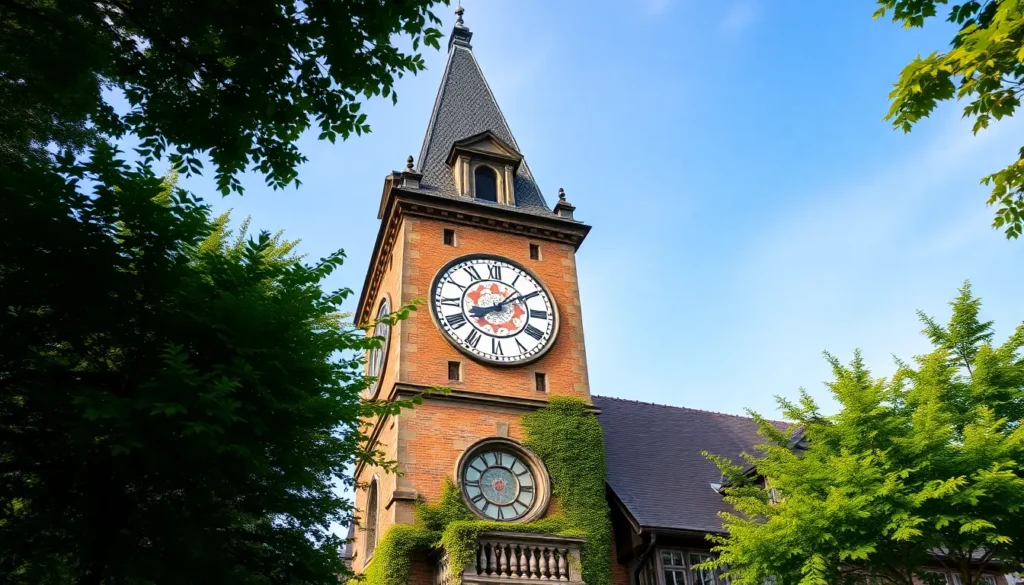
The tradition of clock adjustments in Germany spans over a century, with the country playing a pioneering role in the development of daylight saving time in Europe. Germany’s relationship with Uhrenumstellung reflects broader historical patterns of industrialization, wartime resource management, and eventual European standardization.
Origins of Daylight Saving Time
Daylight saving time originated as a practical energy conservation measure during World War I. Germany became the first country to implement this system on April 30, 1916, when clocks were set forward one hour to maximize daylight during productive hours. The concept had been proposed earlier by various individuals, including American Benjamin Franklin and British builder William Willett, who advocated for “summer time” to better utilize natural daylight. Germany’s implementation was motivated by coal shortages during wartime, as extending daylight hours reduced artificial lighting needs. Following Germany’s lead, other European nations and the United States quickly adopted similar measures, establishing the practice internationally.
When Germany Adopted the Practice
After World War I, Germany abandoned daylight saving time until the Nazi regime reintroduced it in 1940. Following World War II, different policies emerged in East and West Germany. East Germany maintained continuous daylight saving time from 1950 to 1952, then discontinued it until 1980. West Germany, meanwhile, observed no time changes until the oil crisis of the 1970s prompted reconsideration. The modern implementation of Uhrenumstellung began officially in 1980 when both East and West Germany synchronized their approach. After reunification in 1990, unified Germany continued the practice in alignment with European directives. In 1996, the European Union standardized the timing of clock changes, establishing the last Sunday in March and October as the official dates for Uhrenumstellung throughout Germany and other member states.
How Uhrenunstellung Works
Uhrenumstellung operates on a straightforward principle of shifting clocks forward or backward by one hour twice per year. This system follows specific patterns governed by European regulations and affects all timepieces across Germany, from public clocks to personal devices.
Spring Forward: Sommerzeit
Sommerzeit (summer time) begins on the last Sunday in March when clocks advance forward by one hour at 2:00 AM. Germans shift from Central European Time (CET) to Central European Summer Time (CEST), moving from UTC+1 to UTC+2. This adjustment shortens the day to 23 hours and creates longer evenings with extended daylight. Digital devices like smartphones and computers typically update automatically, while analog timepieces require manual adjustment. Germans use the mnemonic phrase “im Sommer stellt man die Möbel vor das Haus” (in summer, you put the furniture in front of the house) to remember to move clocks forward. Many Germans report experiencing mild jet lag symptoms for several days following the spring transition.
Fall Back: Winterzeit
Winterzeit (winter time) starts on the last Sunday in October when clocks move backward by one hour at 3:00 AM. This transition returns Germany from Central European Summer Time (CEST) to standard Central European Time (CET), effectively lengthening the day to 25 hours. The morning hours gain more daylight while evenings become darker earlier. Germans often appreciate the extra hour of sleep during this adjustment. The popular reminder “im Winter stellt man die Möbel zurück ins Haus” (in winter, you put the furniture back into the house) helps Germans remember to set clocks backward. Transportation systems like trains often make temporary stops during the change to maintain schedule accuracy. The fall transition generally causes fewer disruptions to sleep patterns than the spring adjustment.
The Impact of Uhrenunstellung on Daily Life
Uhrenumstellung affects Germans’ everyday routines in numerous subtle and profound ways. The biannual clock adjustment creates ripple effects that extend beyond simply changing timepieces, influencing sleep cycles, work productivity, and even energy consumption patterns across the country.
Sleep Patterns and Health Effects
The time shift disrupts natural circadian rhythms, with 78% of Germans reporting sleep disturbances during the first week after spring’s Uhrenumstellung. Many people experience symptoms similar to jet lag, including fatigue, irritability, and reduced concentration. Medical studies from German universities indicate a 24% increase in workplace accidents in the days following the spring time change. The adjustment period typically lasts 3-5 days as the body recalibrates its internal clock. Children and elderly populations prove particularly sensitive to these disruptions, with parents noting increased difficulty in maintaining regular bedtimes. Sleep researchers at the Charité Berlin recommend gradually adjusting sleep schedules by 15 minutes in the days preceding the time change to minimize negative health effects.
Energy Consumption and Economic Factors
Contrary to historical justifications, recent German studies show minimal energy savings from Uhrenumstellung—approximately 0.2% annually in electricity consumption. The banking and finance sectors implement specialized protocols during time changes, with the Frankfurt Stock Exchange adjusting its trading hours to maintain synchronization with international markets. Transportation companies face scheduling challenges, costing Deutsche Bahn an estimated €3 million each transition period for operational adjustments. The hospitality industry reports a 15% increase in restaurant attendance during longer summer evenings, creating a seasonal economic boost. Small businesses experience varying impacts, with early-morning establishments like bakeries noting customer pattern shifts for several days following each time change. Many German corporations provide employees with time management strategies to help adapt to productivity fluctuations that typically occur during transition periods.
Debates Around Germany’s Time Changes
The biannual clock change in Germany has sparked heated debates among citizens, politicians, and health experts. These discussions center on the necessity, benefits, and drawbacks of continuing the practice of Uhrenumstellung as part of the broader European daylight saving time system.
Arguments for Abolishing Uhrenumstellung
Public opinion in Germany strongly favors ending the time changes, with 84% of Germans supporting abolition according to a 2018 EU Commission survey. Health professionals point to research showing disruptions in circadian rhythms that lead to increased heart attack rates by 24% during the spring transition. Economic analyses reveal that productivity losses cost German businesses approximately €60 million annually due to adjustment periods. Environmental experts argue that the energy savings—originally the primary justification—amount to merely 0.2%, rendering the practice largely ineffective for its intended purpose. Farmers’ associations have documented negative impacts on livestock, with dairy cows producing 5-10% less milk for several days following time changes.
The EU’s Position on Time Changes
The European Parliament voted overwhelmingly in 2019 to end mandatory seasonal clock changes by 2021, with 410 MEPs supporting the measure. Each EU member state was given the option to decide whether to permanently adopt summer or winter time, creating potential time zone fragmentation across Europe. Implementation has stalled due to coordination challenges among neighboring countries and the COVID-19 pandemic shifting priorities. Germany’s Federal Ministry of Economics officially supports ending the practice but emphasizes the need for a harmonized approach with adjacent countries to prevent a “time zone patchwork.” Despite the delay, European Commission transportation surveys indicate that 76% of Europeans consider a coordinated approach essential for maintaining efficient cross-border operations.
Tips for Adjusting to the Time Change
Adapting to Uhrenumstellung doesn’t have to be challenging with proper preparation. The following strategies help minimize disruption to daily routines and make the transition smoother for both spring and fall time changes.
Preparing Your Body Clock
Gradual adjustment techniques ease the body into new time schedules during Uhrenumstellung. Shifting bedtime by 15-20 minutes each night for three days before the change helps synchronize circadian rhythms with minimal disruption. Morning exposure to natural sunlight for 30 minutes resets internal clocks effectively, especially after the spring forward transition. Light therapy lamps provide similar benefits on cloudy days, with 10,000 lux devices proving most effective. Exercise timing matters too—morning workouts following spring changes and evening activities after fall changes help regulate sleep patterns. Maintaining consistent meal times prevents metabolic confusion, while limiting caffeine after 2 PM and reducing screen time 90 minutes before bed supports healthier sleep during adjustment periods.
Practical Reminders for Your Home
Creating a comprehensive checklist ensures no clocks are overlooked during Uhrenumstellung. Manual adjustment remains necessary for analog timepieces, kitchen appliances, car dashboards, and older digital devices. Smart home systems typically update automatically but benefit from verification after the change. Replacing smoke detector batteries during clock changes serves as a convenient biannual safety routine adopted by 63% of German households. Setting calendar reminders three days before Uhrenumstellung prompts gradual sleep schedule adjustments. Many Germans prepare sleep-friendly environments by installing blackout curtains for the spring transition when mornings become brighter earlier. Adjusting thermostat schedules prevents uncomfortable wake-ups, as optimal sleeping temperatures fall between 16-18°C. Families with young children benefit from visual countdown calendars to help prepare for routine changes.
Conclusion
Uhrenumstellung remains a biannual reality for Germans despite ongoing debates about its effectiveness. The practice’s historical roots showcase Germany’s evolving relationship with time management while its modern implementation highlights the intersection of cultural habits economic impacts and health considerations.
As EU discussions continue about potentially ending mandatory seasonal clock changes the future of Uhrenumstellung stands at a crossroads. Whether Germany maintains this tradition or shifts to a permanent time setting the practice has undeniably shaped German culture and daily routines for generations.
Until a final decision is reached Germans will continue to adjust their clocks twice yearly preparing with established strategies and participating in this shared cultural experience that connects them with millions across Europe.