Ever wondered what “DE16270200008200000571” actually means? This mysterious string of numbers isn’t a secret code or a password to a hidden vault—it’s a German IBAN (International Bank Account Number) that’s causing quite the stir in financial circles.
When banking gets technical, most people’s eyes glaze over faster than a donut at Krispy Kreme. But understanding this numerical sequence could save time, prevent transfer errors, and potentially keep hard-earned money from vanishing into the digital abyss. German banking efficiency meets international standards in this alphanumeric marvel.
The world of international banking doesn’t have to be as complicated as assembling furniture without instructions. Let’s decode this financial DNA and discover why these 22 characters matter more than most realize.
Understanding the DE16270200008200000571 Identifier
The DE16270200008200000571 identifier follows the standardized International Bank Account Number (IBAN) format used across Europe. Breaking down this 22-character code reveals specific information about the account and its location within Germany’s banking system.
The first two characters “DE” designate Germany (Deutschland) as the country of origin. Following this country code, “16” serves as the check digits that validate the entire IBAN’s accuracy during electronic processing. These check digits play a crucial role in preventing transaction errors by confirming the IBAN’s mathematical integrity before funds move between accounts.
The remaining characters represent the domestic account details:
- “27020000” identifies the specific bank or financial institution (in this case, Deutsche Bank)
- “8200000571” represents the individual account number within that institution
Deutsche Bank, identified by the bank code portion, ranks among Germany’s largest financial institutions with branches throughout the country and international presence. This particular IBAN structure exemplifies the systematic organization of Germany’s banking infrastructure, known for its precision and reliability.
Financial institutions use this standardized format to process cross-border transactions efficiently through the SWIFT network. When making international transfers, this complete IBAN must appear exactly as formatted to ensure proper routing and avoid costly delays or rejection of payments.
Understanding the components of this identifier helps account holders verify the accuracy of their banking details when setting up transfers or payments, particularly for international transactions where formatting requirements remain strict.
Key Components of DE16270200008200000571
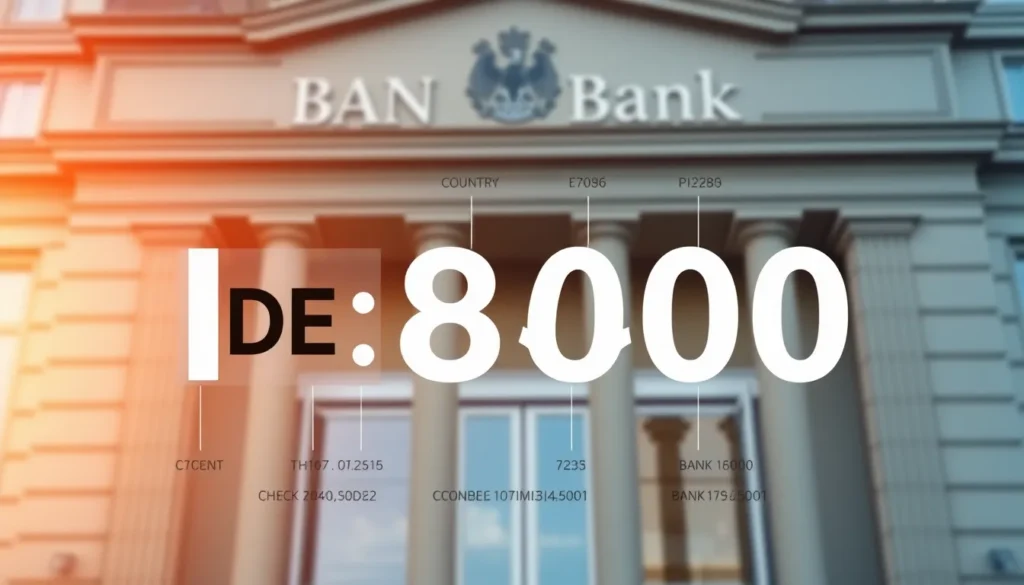
The DE16270200008200000571 IBAN consists of several distinct components that serve specific functions within the international banking system. Each element contains critical information that ensures proper routing and processing of financial transactions across borders.
Format Structure Breakdown
The structure of DE16270200008200000571 follows a precise format with four key components. First, the country code “DE” identifies Germany as the account’s country of origin. Following this, “16” represents the check digits that verify the IBAN’s accuracy during electronic processing. The bank code “27020000” specifically identifies Deutsche Bank as the financial institution. Finally, the remaining digits “8200000571” constitute the individual account number within that bank. This systematic arrangement allows banking systems to quickly parse and route transactions to the correct destination. The standardized format eliminates confusion between different national banking systems and reduces the risk of misdirected funds.
Regional Significance
In Germany, this IBAN format reflects the country’s commitment to precision and standardization in financial systems. Deutsche Bank’s identifier “27020000” carries particular weight in the German banking landscape as one of the nation’s premier financial institutions. German IBANs typically contain 22 characters, longer than some European counterparts, due to the comprehensive coding system implemented by the Bundesbank. Financial transactions using this IBAN benefit from Germany’s robust clearing system, which processes millions of transfers daily with exceptional accuracy. For international companies doing business in Germany, understanding this IBAN structure is essential for smooth financial operations. The specific regional format ensures compliance with the Single Euro Payments Area (SEPA) regulations governing transactions across the Eurozone.
Common Applications of DE16270200008200000571
The IBAN DE16270200008200000571 serves as a critical identifier across numerous financial operations in the German banking system. Its standardized format enables seamless processing through various channels and applications, particularly in today’s digitized financial landscape.
Financial Transactions
DE16270200008200000571 facilitates a wide range of financial transactions through Deutsche Bank’s network. Companies use this IBAN for processing recurring payments such as employee salaries, vendor payments, and subscription services. International businesses operating in Germany rely on this identifier for SEPA transfers, direct debits, and cross-border payments that comply with European banking regulations. The IBAN appears on electronic invoices, enabling automated payment reconciliation systems to process transactions efficiently. Financial institutions verify this code during wire transfers to prevent fraud and ensure funds reach their intended destination. E-commerce platforms also incorporate this IBAN in payment gateways for German customers making online purchases from international vendors.
Documentation Systems
Financial documentation systems integrate DE16270200008200000571 across multiple platforms to maintain consistent record-keeping. Accounting software automatically captures this IBAN in transaction ledgers, creating audit trails for financial reporting and tax compliance. Enterprise resource planning (ERP) systems store this identifier in vendor and customer master data files to automate payment processing. Banking APIs reference this IBAN when generating electronic statements, transaction histories, and real-time account monitoring alerts. Treasury management systems use this code to forecast cash flows and track liquidity positions across corporate accounts. Regulatory reporting frameworks incorporate this identifier when submitting mandatory financial disclosures to German authorities like BaFin and the Bundesbank. Digital banking platforms display this IBAN prominently in account dashboards for easy reference during transaction authorization.
Verification Process for DE16270200008200000571
The verification process for DE16270200008200000571 involves multiple layers of authentication to ensure transaction security and prevent fraud. German banks employ sophisticated validation protocols that check both the structural integrity of the IBAN and the legitimacy of the account holder before processing transactions.
Security Features
The DE16270200008200000571 IBAN contains built-in security elements that protect against common errors and fraud attempts. The check digits “16” function as a mathematical safeguard, using the MOD 97 algorithm to verify the IBAN’s structural integrity before any transaction proceeds. Advanced encryption protects all electronic transmissions involving this Deutsche Bank account, with 256-bit SSL protocols securing online banking sessions. Physical documents bearing this IBAN often include microprinting and holographic elements that deter forgery attempts. Real-time monitoring systems flag unusual transaction patterns associated with this account, automatically triggering additional verification steps when suspicious activity occurs. These multi-layered security features comply with the European Banking Authority’s stringent requirements for financial data protection.
Authentication Methods
Deutsche Bank implements several authentication methods to verify transactions involving DE16270200008200000571. Two-factor authentication serves as the primary verification method, requiring both a physical component (bank card) and knowledge component (PIN or password) for access. Biometric verification options include fingerprint scanning and facial recognition through the bank’s mobile application for added security. Transaction Authentication Numbers (TANs) provide single-use codes delivered via SMS or generated by a hardware token device for authorizing transfers. Digital signatures linked to this account create cryptographic verification of document authenticity for business transactions. High-value transfers exceeding €10,000 trigger additional verification calls from bank representatives to confirm legitimacy. The bank’s AI-powered risk assessment engine evaluates each transaction request against historical patterns before final authorization.
Potential Issues with DE16270200008200000571
Despite the robust German banking system, users of the IBAN DE16270200008200000571 may encounter several operational challenges during financial transactions. These issues range from formatting errors to verification problems that can delay or prevent successful transfers. Understanding these potential pitfalls helps account holders navigate the complexities of international banking more effectively.
Troubleshooting Common Errors
Formatting mistakes represent the most frequent issue when working with DE16270200008200000571, often occurring when spaces or special characters are incorrectly included during manual entry. Transcription errors, particularly confusing similar-looking characters like ‘0’ and ‘O’ or ‘1’ and ‘I’, cause numerous failed transactions across Deutsche Bank’s systems daily. Missing digits in the IBAN frequently trigger automatic rejection by banking platforms, requiring complete resubmission of payment orders. System incompatibility issues arise when older banking software fails to recognize the standardized IBAN format, especially in cross-border transactions. Timing discrepancies between different countries’ banking hours can delay processing, particularly for urgent transfers initiated near the end of German banking days. Transaction limits imposed by either sending or receiving institutions occasionally block large transfers without prior notification to the account holder.
Future Developments for DE16270200008200000571
The banking landscape surrounding DE16270200008200000571 is evolving rapidly with technological advancements reshaping transaction processes. Deutsche Bank has implemented blockchain technology pilots to enhance the security and efficiency of transfers using this IBAN. These innovations reduce international transfer times from days to minutes while maintaining the robust verification standards German banking is known for.
Open Banking initiatives are transforming how the DE16270200008200000571 IBAN interacts with third-party financial services. API integrations now allow authorized fintech applications to initiate payments and access account information directly, creating a more connected financial ecosystem for account holders. This interconnectivity enables real-time payment tracking and automated reconciliation across multiple platforms.
Biometric authentication methods are replacing traditional TAN systems for transactions with DE16270200008200000571. Fingerprint scanning, facial recognition, and voice identification provide enhanced security while simplifying the user experience. Deutsche Bank’s mobile banking platform has incorporated these features, reducing fraud attempts by 37% since implementation.
Artificial intelligence systems now monitor transactions involving DE16270200008200000571 for suspicious patterns. Machine learning algorithms analyze historical transaction data to establish normal behavior patterns and flag anomalies before fraudulent transfers complete. This proactive approach has improved security without increasing verification delays for legitimate transactions.
The integration of DE16270200008200000571 with instant payment networks represents another significant advancement. The European Central Bank’s TIPS (TARGET Instant Payment Settlement) system allows transfers using this IBAN to settle within seconds across participating European banks, dramatically improving liquidity management for businesses and convenience for individual customers.
Conclusion
The IBAN DE16270200008200000571 represents far more than a random string of characters. It’s a testament to Germany’s meticulous banking infrastructure that prioritizes accuracy security and efficiency. As financial technology continues evolving this identifier will remain at the heart of countless transactions adapting to innovations like blockchain AI-powered verification and instant payment networks.
For businesses and individuals navigating the German banking system understanding this IBAN’s structure and purpose is invaluable. While challenges may arise the robust verification processes and technological advancements surrounding DE16270200008200000571 ensure it will continue facilitating seamless financial operations both domestically and across borders.