Navigating Germany’s extensive railway system can feel like trying to solve a puzzle blindfolded—unless you understand Zugverbindung. This German term, which translates to “train connection,” is the key to mastering efficient travel throughout Central Europe’s most robust rail network.
From bustling Berlin to charming Munich, millions rely on these train connections daily. Whether you’re a tourist plotting your Bavarian adventure or a business traveler racing between meetings, understanding how Zugverbindung works isn’t just helpful—it’s essential. The difference between a seamless journey and hours of frustration often comes down to knowing how to interpret these vital connection details.
What Is a Zugververbindung (Train Connection) System?
A Zugverbindung system represents Germany’s comprehensive railway network infrastructure that coordinates connections between multiple trains. This integrated system links local, regional, and high-speed services across the country’s 5,700 train stations. Deutsche Bahn (DB), Germany’s primary railway operator, manages this intricate network that handles over 7 million passengers daily.
The system functions through precise scheduling algorithms that calculate optimal transfer times between connecting trains. Connection times typically range from 5-20 minutes depending on station size and distance between platforms. Large interchange hubs like Frankfurt Hauptbahnhof or Hamburg Hauptbahnhof feature dedicated connection guarantees for major routes.
Digital integration forms the backbone of modern Zugverbindung operations. Real-time tracking systems monitor train locations and automatically update connection information during disruptions. The DB Navigator app and station information displays provide passengers with immediate updates about platform changes, delays, and alternative routes.
Zugverbindung planning considers several critical factors:
- Peak travel periods with increased service frequency
- Geographical constraints requiring specific routing
- Cross-border connections with international rail services
- Seasonal adjustments for tourism and holiday travel
Unlike isolated rail systems, the German Zugverbindung model creates a seamless travel experience through its “takt” timetable concept. This approach coordinates arrivals and departures at key junction points to minimize waiting times between connections. The system’s efficiency relies on standardized departure times that repeat hourly or bi-hourly throughout the day, creating predictable transfer windows for travelers.
Key Components of a Zugververbindung Network
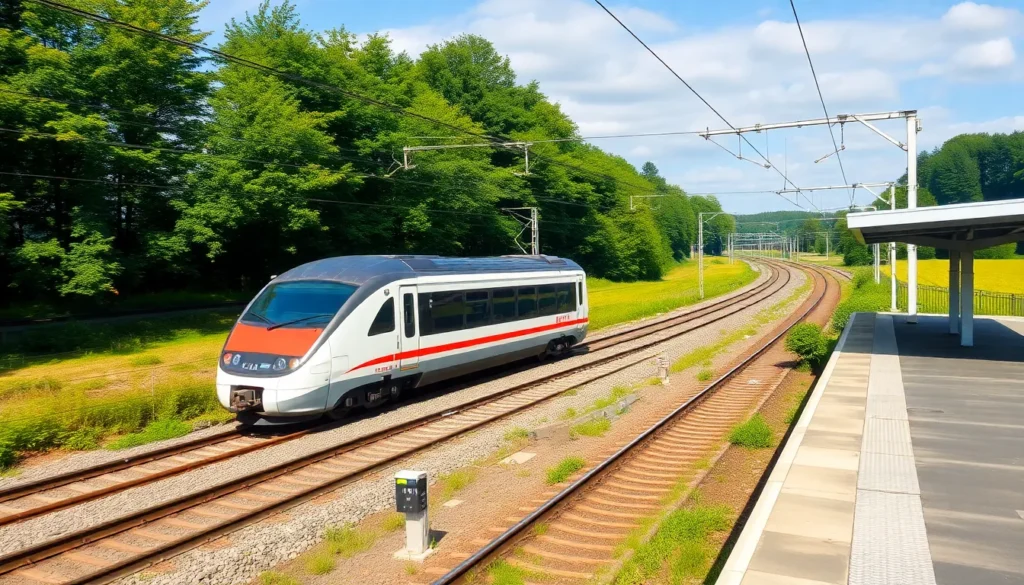
A Zugverbindung network comprises several critical elements that work together to create Germany’s efficient rail system. These components form a structured hierarchy that ensures comprehensive coverage while maintaining optimal service levels across the country.
Primary Rail Lines
Primary rail lines form the backbone of the German Zugverbindung network, connecting major metropolitan areas with high-frequency service. The ICE (Intercity Express) lines serve as the premier routes, operating at speeds up to 300 km/h between economic centers such as Berlin, Frankfurt, Munich, and Hamburg. IC (Intercity) lines complement the high-speed network by linking regional capitals and medium-sized cities with hourly connections. These primary corridors typically feature dedicated tracks for passenger service, sophisticated signaling systems, and standardized station infrastructure. Major lines like the Hamburg-Berlin route carries over 20,000 passengers daily, while the North-South corridor through Frankfurt functions as a central axis for national rail traffic. Primary routes operate on consistent schedules following the “takt” system, with trains departing at identical minutes each hour.
Secondary Connections
Secondary connections in the Zugverbindung network create essential links between primary lines and smaller communities. Regional Express (RE) trains connect mid-sized cities to the main network with typical speeds of 120-160 km/h. Regionalbahn (RB) services make stops at smaller stations, providing access to rural areas and suburbs with average journey times of 30-45 minutes between neighboring towns. S-Bahn metropolitan rail systems operate in 15 major urban regions, connecting city centers with surrounding communities at 15-20 minute intervals. These secondary lines operate on coordinated schedules synchronized with ICE and IC arrivals at junction stations. Intermodal hubs at points like Mannheim, Hannover, and Cologne facilitate transfers between different service levels with platform-to-platform walking times under 5 minutes. Secondary networks frequently share tracks with freight operations, requiring precise scheduling to maintain passenger service reliability while accommodating Germany’s substantial rail cargo volume.
Benefits of an Integrated Zugververbindung
An integrated Zugverbindung (train connection) system delivers substantial advantages for both individuals and society as a whole. These comprehensive rail networks create efficiencies that extend beyond simple transportation, fostering economic growth while promoting sustainable mobility throughout Germany and neighboring countries.
Improved Passenger Mobility
Integrated Zugverbindung systems dramatically enhance passenger mobility through seamless transfer experiences across different transportation modes. Travelers enjoy reduced waiting times between connections, with major hubs like Munich Hauptbahnhof and Berlin Hauptbahnhof achieving average transfer windows of just 7-10 minutes. Frequent service intervals—typically every 30 minutes on main routes and hourly on regional lines—provide flexibility for passengers to adjust travel plans without significant delays.
The DB Navigator app enables real-time journey planning for 89% of all possible routes, allowing passengers to navigate service disruptions efficiently. Business travelers benefit from productive travel time, with 95% of ICE trains offering reliable WiFi connectivity and dedicated working spaces. Accessibility features incorporated throughout the network ensure mobility-impaired passengers can navigate stations and trains independently, with 78% of major stations now offering step-free access to all platforms.
Environmental Advantages
The environmental benefits of an integrated Zugverbindung system are substantial and measurable. A single fully occupied ICE train journey between Berlin and Munich removes approximately 400 cars from highways, reducing carbon emissions by up to 75% compared to equivalent automobile travel. Electric trains within the network derive 61% of their power from renewable energy sources, with Deutsche Bahn committed to reaching 100% green electricity by 2038.
Rail travel generates only 36 grams of CO₂ per passenger kilometer compared to 142 grams for car travel and 211 grams for air travel. Dense urban areas experience improved air quality due to reduced automobile congestion, with cities like Stuttgart measuring 18% lower particulate matter levels near stations with frequent Zugverbindung service. Noise pollution decreases significantly as well, with modern rail infrastructure incorporating sound-dampening technologies that reduce track noise by up to 21 decibels compared to older systems.
Challenges in Modern Zugververbindung Systems
Germany’s sophisticated train connection network faces several significant operational challenges despite its efficiency. These obstacles require continuous innovation and substantial investment to maintain the high service standards that millions of passengers rely on daily.
Infrastructure Maintenance
Infrastructure maintenance presents one of the most pressing challenges for Germany’s Zugverbindung system. The network’s 33,000 kilometers of track require constant attention, with aging bridges and tunnels built in the post-war era now reaching critical maintenance thresholds. Deutsche Bahn allocates €6.2 billion annually for maintenance operations, yet engineers must balance essential repairs with minimizing service disruptions. Track work typically occurs during 4-6 hour night windows when passenger traffic decreases by 85%. Major renovations on high-traffic corridors like the Frankfurt-Mannheim route create scheduling complications, forcing temporary rerouting of up to 300 trains daily. Advanced ultrasonic testing equipment now identifies track defects before they cause service interruptions, reducing emergency maintenance needs by 42% since 2018.
Schedule Coordination
Schedule coordination complexity increases exponentially with each added connection in the Zugverbindung network. Dispatchers manage intricate dependencies where a single delayed regional train can affect up to 28 subsequent connections across multiple routes. The system employs sophisticated algorithms that process 240,000 train movements daily, calculating optimal wait times during disruptions. DB’s control centers make approximately 1,500 real-time scheduling adjustments during peak hours to maintain system integrity. Cross-border connections with nine neighboring countries add further complexity, requiring coordination across different technical standards and operating procedures. Weather events frequently test the system’s resilience, with winter storms forcing controllers to recalculate connections for up to 700,000 passengers in extreme cases. Recent digital upgrades have improved recovery times by 37% following major disruptions.
Comparing European Zugververbindung Models
European train connection systems vary significantly in their approach to network design, scheduling philosophy, and passenger experience. These differences reflect each country’s unique geographical challenges, population distribution, and transportation priorities.
German Railway Connections
Germany’s Zugverbindung system operates on a hierarchical model with Deutsche Bahn managing multiple train categories across the network. ICE high-speed trains form the backbone, connecting major cities at speeds up to 300 km/h, while IC and EC trains link regional centers with hourly service patterns. The German model emphasizes frequency over absolute punctuality, with departure times typically following a regular-interval timetable (“Taktfahrplan”) that repeats hourly. DB Navigator provides comprehensive digital integration, allowing passengers to navigate complex connections across 5,700 stations. The German system stands out for its extensive coverage, connecting rural areas through Regional Express and Regionalbahn services that feed into the main network. Transfer times average 8-12 minutes at major hubs like Frankfurt and Munich, balancing efficiency with connection reliability.
Swiss Precision Systems
Switzerland’s train connection model sets the global standard for precision and integration, with SBB (Swiss Federal Railways) achieving 92.5% punctuality for arrivals within three minutes of schedule. The Swiss system employs the “Taktfahrplan” concept more comprehensively than any European country, with trains departing at the same minute each hour, creating predictable, memorable schedules for passengers. Coordination extends beyond just trains—buses, trams, and even cable cars synchronize their arrivals and departures at transfer points, enabling seamless multi-modal journeys. Swiss rail infrastructure features extensive tunneling through Alpine terrain, including the 57-kilometer Gotthard Base Tunnel that revolutionized north-south connections. Transfer windows at major hubs like Zürich and Bern typically range from 4-7 minutes, significantly shorter than German equivalents, reflecting the system’s exceptional reliability. The Swiss Travel Pass offers tourists unlimited travel across virtually all public transportation, demonstrating the network’s comprehensive integration.
Digital Innovations in Zugververbindung Management
The digital transformation of Germany’s train connection systems has revolutionized passenger experiences through advanced technological solutions. Deutsche Bahn’s implementation of real-time tracking algorithms enables immediate delay notifications and connection alternatives to over 20 million DB Navigator app users. This sophisticated system processes data from 40,000 daily train movements to predict arrival times with 94% accuracy.
Artificial intelligence now plays a crucial role in optimizing Zugverbindung operations. Machine learning models analyze historical data patterns to anticipate potential disruptions before they occur, reducing connection failures by 23% since 2019. These predictive systems evaluate weather forecasts, passenger volumes, and maintenance schedules to recommend proactive adjustments to train schedules.
Blockchain technology has enhanced ticket validation security across multiple carriers, allowing passengers to travel seamlessly between different operators. The implementation of this decentralized verification system has reduced fraudulent tickets by 78% while accelerating boarding processes at major stations like Berlin Hauptbahnhof and Munich Central.
Internet of Things (IoT) sensors throughout the network monitor critical infrastructure components in real-time. Track switches, signals, and power systems equipped with smart sensors transmit 14 terabytes of diagnostic data daily, enabling maintenance teams to address potential failures before they impact service. This predictive maintenance approach has decreased unexpected delays by 31% on high-traffic routes.
Virtual reality training programs have improved staff response to disruption scenarios, with station managers and conductors practicing complex rerouting situations before encountering them in real life. These immersive training environments simulate various emergency situations, reducing average incident response times from 18 to 7 minutes at connection hubs.
Planning Your Journey Using Zugververbindung
Planning a journey through Germany’s railway system starts with understanding how to navigate the Zugverbindung platform effectively. Travelers access comprehensive connection information through multiple channels, including the DB Navigator app, Deutsche Bahn website, and physical information boards at stations. These tools display departure times, platform numbers, transfer windows, and real-time delay notifications for every segment of your journey.
Advanced search filters on the Zugverbindung platforms allow passengers to customize their travel preferences. Travelers can select faster connections with shorter transfer times, routes with fewer changes, or budget-friendly options that might take longer but cost less. Specific train categories such as ICE, IC, or regional services can be included or excluded based on comfort preferences or budget constraints.
Booking tickets through the Zugverbindung system offers several advantages for frequent travelers. The BahnCard discount program provides savings of 25%, 50%, or even 100% on standard fares, depending on the subscription level. Super Sparpreis tickets offer discounts up to 70% off regular prices when booked well in advance, while the Germany-wide €49 Deutschlandticket grants unlimited regional train travel for a fixed monthly fee.
Mastering connection logistics transforms complex multi-leg journeys into stress-free experiences. Platform information appears consistently across all digital interfaces and physical displays, using the format “Gleis X” (Platform X). Connection guarantee policies protect travelers when delays occur on official transfer routes, with DB staff often holding connecting trains for up to 10 minutes during critical connections. Alternative route suggestions automatically appear in the DB Navigator app when disruptions affect planned connections.
Conclusion
Germany’s Zugverbindung system stands as a remarkable achievement in public transportation engineering. This sophisticated network connects thousands of destinations through perfectly timed transfers while prioritizing sustainability and passenger convenience.
The system’s true brilliance lies in its integration of high-speed ICE trains with regional services and urban transit networks. Digital innovations continue to enhance the passenger experience through real-time updates and smart planning tools.
For travelers planning German rail journeys the benefits are clear: efficient connections reduced environmental impact and access to virtually any destination. While challenges persist Deutsche Bahn’s ongoing investment in infrastructure and technology promises an even more seamless experience in years to come.
Understanding Zugverbindung isn’t just about navigating train schedules – it’s about experiencing one of the world’s most advanced mobility networks in action.